How Often Should Fire Equipment Be Inspected in Ontario?
If you own or manage a building in Toronto or the wider GTA, the question of how often fire equipment needs inspection in Ontario has a precise answer, and it is not the same interval for every device. The Ontario Fire Code sets the legal duty to keep systems in working order, while standards like NFPA, CAN/ULC and CSA define the actual schedules. This guide lays out every interval clearly, from the monthly extinguisher glance to the multi-year hydrostatic test, so nothing in your building quietly falls out of compliance.
Quick answer: In Ontario, fire equipment is inspected on staggered cycles set by the Ontario Fire Code and referenced standards. Portable extinguishers need a monthly visual check, annual maintenance, a 6-year internal exam and a 12-year hydrostatic test (NFPA 10); fire alarm systems are tested annually (CAN/ULC-S536); sprinkler and standpipe systems follow weekly-to-multi-year checks under NFPA 25; and emergency and exit lighting require a monthly function test plus an annual full-duration test. Routine monthly checks can be done by trained staff, but annual and multi-year tests must be performed by qualified technicians.
The short answer: inspection intervals at a glance
Fire protection is built on overlapping cycles. Some checks happen monthly, some annually, and a few only every several years. Missing one does not just risk a failed inspection from your local fire prevention office, it can leave a life-safety system unable to perform when it matters. Here is the high-level rhythm most Ontario buildings follow.
- Monthly: visual checks of portable fire extinguishers and a function test of emergency lighting.
- Quarterly: testing of certain water-based system valves, gauges and alarm devices under NFPA 25.
- Annually: full fire alarm inspection and testing (CAN/ULC-S536), extinguisher maintenance, sprinkler and standpipe testing, and a full-duration emergency lighting test.
- Every 5 to 6 years: internal examination of stored-pressure extinguishers and internal inspection of sprinkler piping.
- Every 12 years: hydrostatic testing of stored-pressure extinguisher cylinders.
| Equipment | Routine check | Full test / maintenance | Multi-year | Standard |
|---|---|---|---|---|
| Portable fire extinguishers | Monthly visual check | Annual maintenance | 6-year internal exam; 12-year hydrostatic test | NFPA 10 |
| Fire alarm system | — | Annual inspection and testing | Verification at installation or modification (CAN/ULC-S537) | CAN/ULC-S536 |
| Sprinklers & standpipes | Weekly / monthly gauges and valves; quarterly alarm devices | Annual flow, drain and head/piping tests | 5-year internal pipe inspection | NFPA 25 |
| Emergency & exit lighting | Monthly function test | Annual full-duration test (typically 30 minutes) | — | Ontario Fire Code |
The sections below break each system down. For a building-wide view that pulls all of these into one visit, see our guide to the annual fire inspection in Toronto.
Fire extinguishers (monthly, annual, 6-year, 12-year)
Portable extinguishers have the most layered schedule, and they are also the device most often found out of date during a fire inspection. The fire extinguisher inspection frequency under NFPA 10 works on four tiers. Each month, someone on site should perform a quick visual check: confirm the unit is in its place, fully charged on the gauge, unobstructed, and free of obvious damage or tampering.
Once a year, a qualified technician carries out a full maintenance inspection, examining the valve, hose, seal and pressure in detail. Stored-pressure extinguishers then need an internal examination at roughly the six-year mark, and a hydrostatic test of the cylinder at about twelve years. The exact timing varies by extinguisher type, which is why knowing your equipment matters. Our breakdown of fire extinguisher types explains which class belongs where, and our extinguisher service and inspection page covers recharging and tagging.
Under NFPA 10, stored-pressure extinguishers generally require a monthly visual check, annual maintenance, an internal examination at about 6 years, and a 12-year hydrostatic test. Always confirm the interval against the specific extinguisher type and its service tag.
Fire alarm systems (annual plus monitoring)
The fire alarm testing frequency in Ontario is anchored by CAN/ULC-S536, which calls for inspection and testing of the system every year. That annual test covers initiating devices like pull stations and detectors, notification appliances, the control panel, and the battery backup. A brand-new or modified system is also verified at installation under CAN/ULC-S537, a separate one-time process that confirms the system was built and wired correctly before it goes live.
If your system is monitored, and most commercial buildings across North York, Scarborough and Etobicoke are, the annual test should confirm that alarm and trouble signals actually reach the monitoring station. Tovic Fire provides 24/7 monitoring aligned with ULC, NFPA, CSA and CFAA practice, so a verified panel is only useful if the signal path behind it is verified too. Our fire alarm inspection and testing guide goes deeper on what a compliant annual visit includes.
Sprinkler and standpipe systems
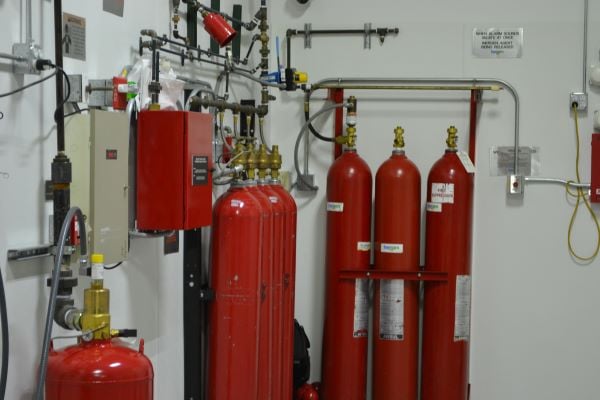
Water-based systems, including sprinklers and standpipes, follow the sprinkler inspection schedule defined in NFPA 25. This standard blends frequent quick checks with deeper periodic tests. Gauges, control valves and water levels are inspected on short cycles, generally weekly or monthly depending on the component and valve type. Alarm devices, water-flow alarms and certain valves are tested quarterly.
Annually, the system receives a fuller workout: main drain tests, antifreeze checks where applicable, and inspection of sprinkler heads and piping. Internal inspections of piping for obstructions are typically carried out at the five-year mark. Because the exact frequency depends on whether your system is wet, dry or pre-action, a professional schedule tailored to your building is the safest path. Our fire sprinkler installation guide explains how each system type behaves.
Lost track of what is due when?
Let our team map every interval in your building and book a single site assessment across Toronto, Mississauga, Vaughan and Markham so nothing slips past its due date.
Emergency and exit lighting
Emergency lighting is easy to overlook because it sits dormant until the power fails. Under the Ontario Fire Code, emergency lights and illuminated exit signs generally require a monthly function test to confirm they switch on, plus an annual test that runs the units for their full rated duration, typically thirty minutes, to prove the batteries hold.
A unit that lights up for a few seconds during a quick test may still fail after ten minutes of real outage, which is exactly when occupants are trying to find the exits. That is why the annual full-duration test is not optional. Our guide to emergency and exit lighting in Toronto walks through placement and the testing record you need to keep.
Who can legally perform these inspections
There is a clear split. The routine monthly visual checks can and should be done by trained on-site staff, and the Ontario Fire Code makes the building owner responsible for ensuring they happen. The annual and multi-year tests, however, must be carried out by qualified technicians working to the applicable ULC, NFPA and CSA standards, with proper documentation kept on file for the fire inspector.
Records matter as much as the work itself. A fire prevention officer who visits your property will ask for dated, signed inspection reports, and a missing tag can trigger an order even when the equipment is fine. For a full picture of what a compliant building looks like, our Ontario Fire Code compliance checklist and our guide on inspection frequency work well together. When you want it handled, our services page outlines everything we cover, and you can always book a site assessment directly.
Frequently asked questions
How often do fire extinguishers need inspection?
Portable extinguishers should be given a quick visual check every month and a full maintenance inspection every year by a qualified technician. Under NFPA 10, stored-pressure extinguishers also need an internal examination at roughly six years and a hydrostatic test at about twelve years, depending on the type.
How often is a fire alarm tested?
Fire alarm systems are inspected and tested annually under CAN/ULC-S536. A new system is verified at installation under CAN/ULC-S537. Where the system is monitored, the connection to the monitoring station should be confirmed as part of that testing so signals reach the station reliably.
How often are sprinklers inspected?
Water-based fire protection systems such as sprinklers and standpipes follow the inspection, testing and maintenance schedule in NFPA 25. This blends frequent checks, generally weekly or monthly for gauges and valves, with quarterly, annual and multi-year tests of alarms, flow and internal components.
Can I inspect fire equipment myself?
You can and should perform the routine monthly visual checks yourself, such as confirming extinguishers are present, charged and unobstructed. The annual and multi-year tests must be carried out by qualified technicians using the applicable ULC, NFPA and CSA standards, and the records must be kept for fire inspectors.