Your Annual Fire Inspection in Toronto: One Report for Every System
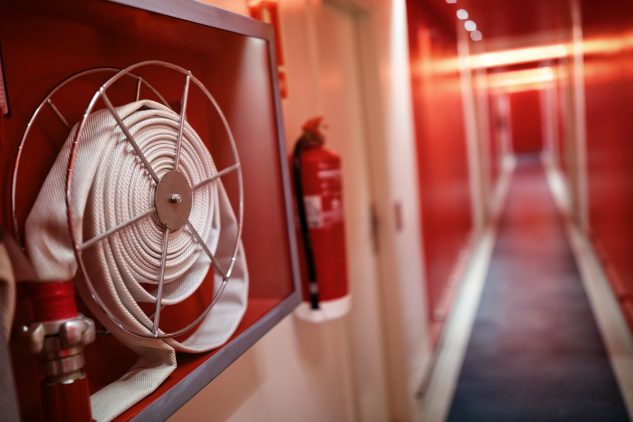
An annual fire inspection in Toronto should not mean four separate contractors, four separate visits, and four separate invoices arriving at different times of the year. The four core life-safety systems in your building, the sprinklers, the fire alarm, the emergency lighting, and the portable extinguishers, can all be inspected together on one visit and documented in one report. For property managers and business owners across Toronto and the GTA, that single coordinated approach is faster, cleaner, and far easier to keep on file.
Quick answer: An annual fire inspection in Toronto checks the building's four core life-safety systems, the water-based sprinklers (NFPA 25), the fire alarm (CAN/ULC-S536), the emergency and exit lighting (CAN/ULC-S537), and the portable fire extinguishers (NFPA 10), all under the Ontario Fire Code. These can be inspected together on a single visit and documented in one report that lists every test performed, any deficiencies found, and the recommended corrective actions. That single record is what you keep on file to demonstrate compliance to an inspector, fire official, or insurer.
Below we walk through exactly what a combined fire equipment inspection covers, what each system needs under the Ontario Fire Code, what your report should contain, and why bundling everything with one contractor saves you time and removes the guesswork from staying compliant.
What an annual fire inspection includes
A complete commercial fire inspection looks at every system whose job is to detect a fire, warn occupants, help them get out, and help control or extinguish the fire itself. In most GTA buildings that means four families of equipment, each governed by its own standard but all referenced under the Ontario Fire Code (O. Reg. 213/07) made under the Fire Protection and Prevention Act.
- The water-based fire sprinkler system, inspected and tested to NFPA 25.
- The fire alarm system, inspected and tested annually to CAN/ULC-S536.
- Emergency and exit lighting, function-tested monthly and load-tested annually.
- Portable fire extinguishers, maintained to NFPA 10.
The goal of a single annual visit is to confirm that all of these are present, in good condition, and will perform when they are needed. Anything that fails is recorded as a deficiency so it can be corrected on a clear timeline.
| System | Governing standard | Typical inspection frequency |
|---|---|---|
| Fire sprinkler system | NFPA 25 | Annual testing, with additional weekly, monthly, quarterly, and multi-year tasks depending on the component |
| Fire alarm system | CAN/ULC-S536 (annual); CAN/ULC-S537 verification at installation | Annual inspection and testing, with monthly owner checks |
| Emergency and exit lighting | Ontario Fire Code | Monthly function test and annual full-duration load test |
| Portable fire extinguishers | NFPA 10 | Monthly visual check and annual maintenance; ~6-year internal exam and ~12-year hydrostatic test for many stored-pressure units |
1. Fire sprinkler system
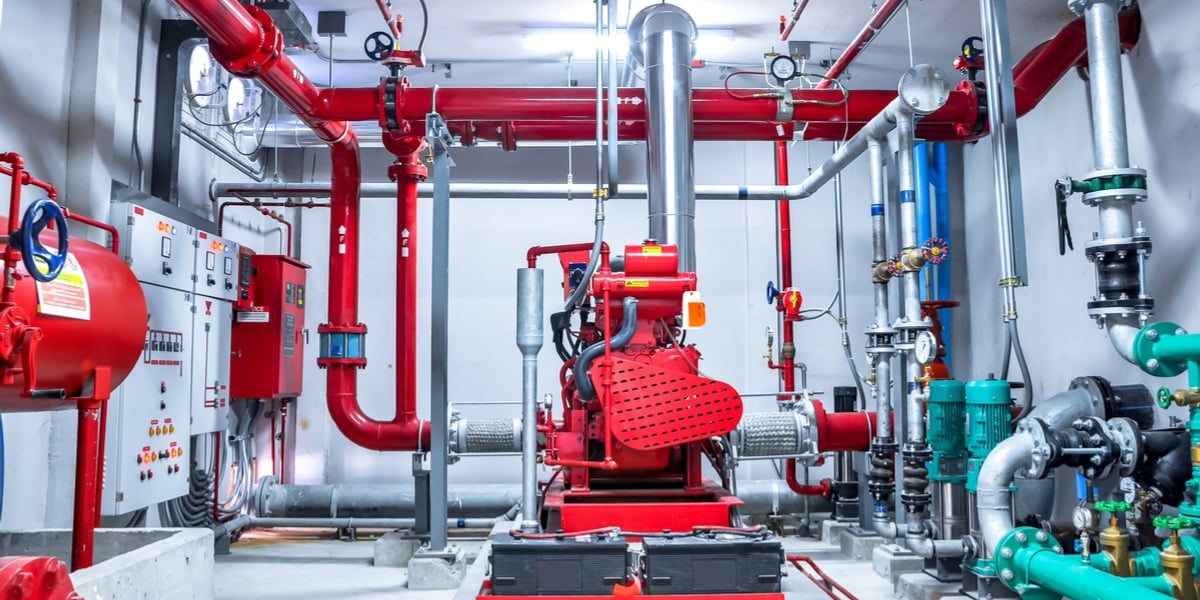
Water-based suppression is inspected and tested under NFPA 25. An annual sprinkler inspection generally checks control valves, gauges, the alarm devices, and the physical condition of sprinkler heads and piping, and includes flow and trip tests appropriate to the system type. A common issue we find in older Scarborough and North York buildings is heads that have been painted over or blocked by stored stock, both of which compromise performance. If your building runs a wet, dry, or pre-action system, our guide to fire sprinkler installation in Toronto explains how each type behaves and why that affects testing.
Code note: Under NFPA 25, water-based fire protection systems are subject to scheduled inspection, testing, and maintenance at intervals ranging from weekly and monthly through to annual and multi-year, depending on the component. The annual visit captures the yearly requirements and verifies that the more frequent owner checks have been kept up.
2. Fire alarm system
Your fire alarm system is inspected and tested annually to CAN/ULC-S536. That work generally includes testing initiating devices such as pull stations, smoke and heat detectors, the notification appliances, the control panel, batteries, and the connection to your monitoring station. A new system is also verified to CAN/ULC-S537 when it is first installed, which is a separate, deeper process than the annual test. We cover the difference in detail in our guide to fire alarm inspection and testing.
Because Tovic provides 24/7 monitoring, the annual test also confirms that signals are actually reaching the listening station, not just sounding locally. A panel that beeps on site but never reports out is a silent risk that a thorough inspection is built to catch.
3. Emergency and exit lighting
Emergency lighting and illuminated exit signs keep an escape route visible when normal power fails. These units carry two distinct test cycles. A monthly function test confirms each unit switches on when power is interrupted, and an annual test runs the units for their full rated duration to prove the batteries actually hold up under load, not just for a few seconds. Burned-out lamps and tired batteries are among the most common deficiencies we record, partly because the monthly checks are easy to forget. Our guide to emergency and exit lighting in Toronto walks through both cycles in plain language.
4. Fire extinguishers
Portable extinguishers are maintained under NFPA 10. Each unit gets a quick visual check monthly and a hands-on annual maintenance inspection that confirms charge, pressure, hose and nozzle condition, signage, mounting, and accessibility. Stored-pressure extinguishers also carry longer cycles, typically an internal examination around the six-year mark and a hydrostatic test around twelve years. If you are not sure which classes of extinguisher your space requires, our breakdown of fire extinguisher types covers ABC, CO2, water, and K-class and where each belongs.
One inspection. Four systems. One report.
Book a single site assessment and we will inspect your sprinkler, alarm, emergency lighting, and extinguishers together, then hand you one clear compliance report for Toronto or anywhere in the GTA.
Your detailed inspection report
The report is the part that matters long after the technician leaves. A proper fire protection inspection report lists each system, the specific tests performed, the standard each was tested against, every deficiency found, and the recommended corrective action with a sensible timeline. This is the document you keep on file and the document an inspector, fire official, or insurer will generally ask to see.
Because all four systems are covered in one place, you no longer have to chase paperwork from several vendors or reconcile mismatched dates. One report, one set of due dates, one contractor to call when a deficiency needs to be fixed. For a building-wide view of how the different cycles fit together, our fire equipment inspection schedule lays out the monthly, annual, and multi-year intervals side by side.
Why bundle all four with one contractor
Coordinating a single annual fire safety inspection across the GTA, whether your site is in Etobicoke, Mississauga, Vaughan, or Markham, is simply more efficient than juggling separate trades. One scheduled visit means one disruption to your tenants, one point of accountability, and one report rather than four. It also removes the gaps that appear when different vendors test on different calendars and nobody owns the full picture.
Tovic Fire is aligned with ULC, NFPA, CSA, TSSA, and CFAA practice and performs City of Toronto permitted work, so the same team that inspects your building can also design, install, and monitor the systems in it. To see the full scope, visit our services overview, or reach out directly through our contact page to set a date.
Frequently asked questions
What does an annual fire inspection include?
A full annual fire inspection typically covers your water-based sprinkler system, fire alarm system, emergency and exit lighting, and portable fire extinguishers. Each system is inspected and tested against the applicable standard, such as NFPA 25 for sprinklers and CAN/ULC-S536 for fire alarms, under the framework of the Ontario Fire Code. The result is a documented record of the condition of every life-safety system in your building.
How long does an inspection take?
Duration depends on building size, the number of devices, and how many systems are present. A small commercial unit may take a few hours, while a larger multi-tenant building can take a full day or more. Bundling all four systems with one contractor on a single visit is generally the most efficient way to complete the work and limit disruption to your tenants and operations.
What do I get afterward?
You receive a detailed fire protection inspection report covering each system, the tests performed, any deficiencies found, and recommended corrective actions. This documentation is what you keep on file to demonstrate compliance, and it is what an inspector or insurer will generally ask to see. We can also quote and schedule any repairs needed to bring deficient systems back into service.
How often is an annual fire inspection required?
Under the Ontario Fire Code and the referenced standards, the major life-safety systems generally require annual inspection and testing, on top of more frequent monthly checks for items such as extinguishers and emergency lighting. Some components carry longer cycles, such as the roughly six-year internal examination and twelve-year hydrostatic test for many stored-pressure extinguishers. An annual visit keeps the yearly requirements current and flags anything approaching its longer-cycle due date.