Fire Extinguisher Types Explained: Which One Your Toronto Business Needs
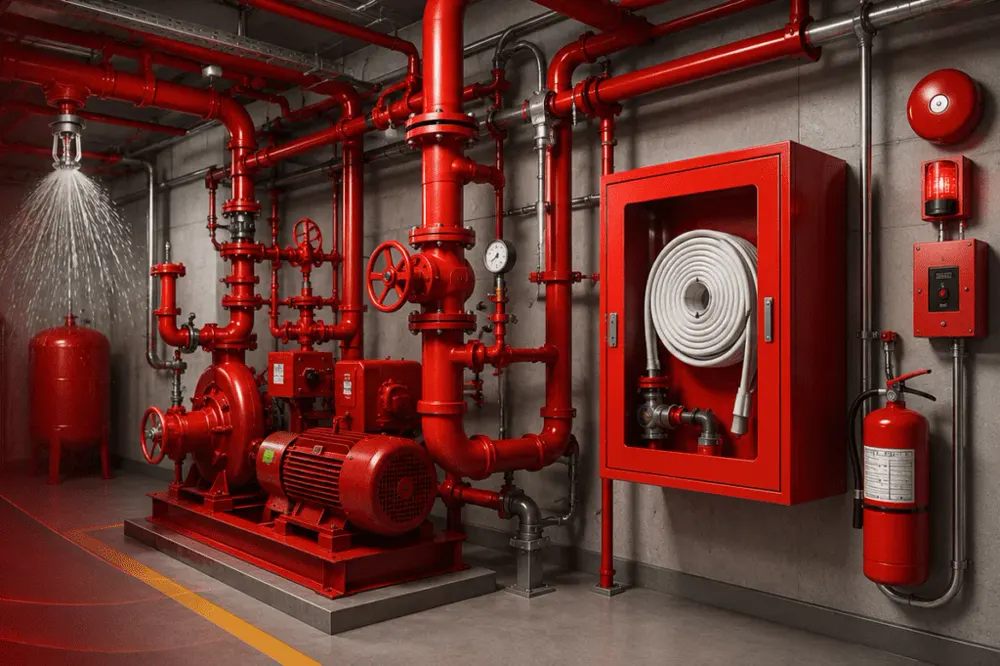
Choosing between the different fire extinguisher types is not about grabbing whatever is on the shelf. The right unit depends on what is likely to burn in your space, and the wrong one can make a fire worse. This guide breaks down ABC, CO2, water and Class K extinguishers in plain language so you can match the right equipment to your Toronto or GTA business and stay aligned with the Ontario Fire Code.
Quick answer: Match the extinguisher to the fire class in your space: ABC dry chemical covers ordinary combustibles, flammable liquids and energised electrical (Class A, B and C) and is the general-purpose default; CO2 suits Class B and C near electronics because it leaves no residue; water is for Class A only; and Class K wet chemical is required for cooking oils and fats in commercial kitchens. Under the Ontario Fire Code, units are sized, placed and maintained to NFPA 10, so a site assessment is the reliable way to confirm the right types, sizes and locations for your Toronto or GTA premises.
The classes of fire (A, B, C, D, K)
Every extinguisher is rated for one or more classes of fire, and those classes describe the fuel involved. Understanding them is the foundation for choosing the right unit, because an extinguisher rated for the wrong class may be useless or dangerous.
- Class A — ordinary combustibles such as wood, paper, cloth and most plastics.
- Class B — flammable and combustible liquids and gases like fuels, oils, solvents and paints.
- Class C — fires involving energised electrical equipment, from wiring to switchgear.
- Class D — combustible metals such as magnesium, sodium and titanium, found in specialised industrial settings.
- Class K — cooking oils and fats in commercial kitchens, which burn hot and behave unlike other liquids.
Most Toronto offices, shops and warehouses deal with Class A, B and C hazards. Restaurants add Class K, and certain manufacturers in Mississauga or Vaughan may carry Class D risks. Knowing your hazard classes is the first step in any extinguisher plan, and it feeds directly into your wider Ontario fire code compliance checklist.
ABC dry chemical extinguishers
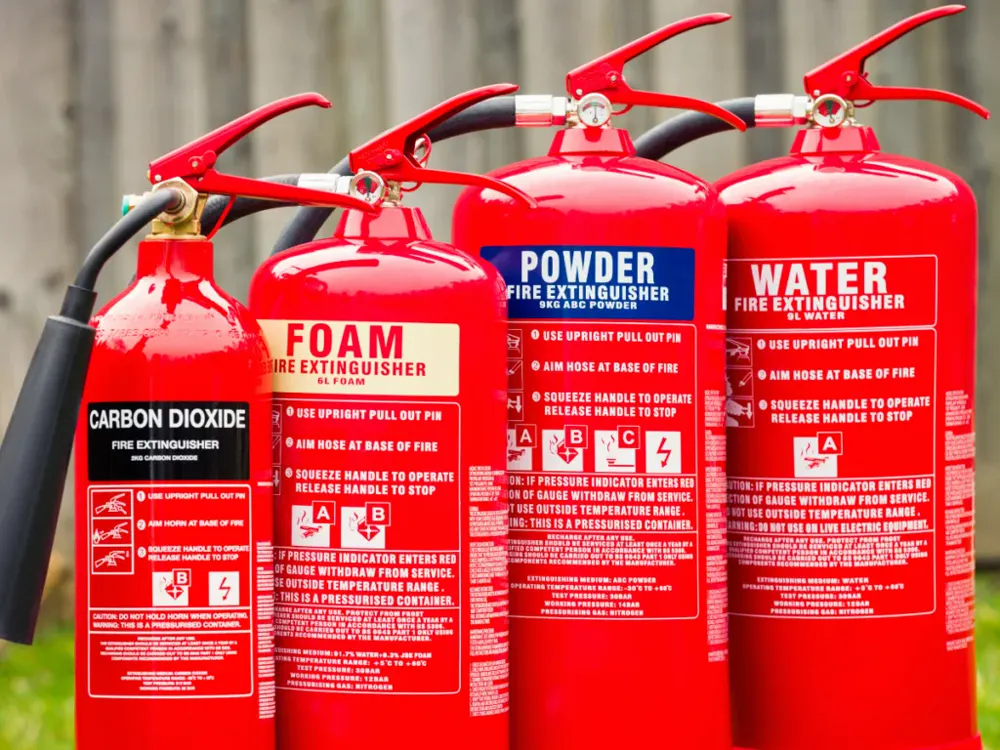
The ABC fire extinguisher is the multipurpose workhorse you will see most often across the GTA. It uses a monoammonium phosphate dry chemical powder that smothers the fire and interrupts the chemical reaction, and it is rated to handle Class A, B and C fires from a single unit. That versatility makes it a sensible default for offices, retail floors and general storage areas in North York, Etobicoke and Scarborough.
There is a trade-off. The powder is mildly corrosive and leaves a fine residue that can damage electronics and is unpleasant to clean up. For most general-purpose locations that is an acceptable compromise for the broad coverage an ABC unit provides.
Code note. Portable fire extinguishers in Ontario are maintained to NFPA 10. That typically means a quick visual check every month, a thorough maintenance inspection every year, an internal examination at roughly 6 years for many stored-pressure units, and a hydrostatic test at about 12 years.
CO2 extinguishers
A CO2 fire extinguisher discharges carbon dioxide gas that displaces oxygen and cools the fuel. It is rated for Class B and Class C fires and leaves no residue, which is exactly why you find these units near server rooms, electrical panels, labs and electronics. After a discharge there is nothing to wipe down and no powder coating your equipment.
CO2 is less effective on Class A materials because the gas disperses quickly and may not fully cool deep-seated combustibles. The discharge horn also gets extremely cold, so handling matters. For mixed environments many businesses pair CO2 units near sensitive equipment with ABC units in general areas.
Water and water-mist extinguishers
Water extinguishers are the simplest type and are rated for Class A fires only. They cool ordinary combustibles below their ignition point and are well suited to environments dominated by paper, wood and textiles, such as some warehouses and storage rooms. They must never be used on flammable liquids or energised electrical equipment, where water can spread the fire or conduct a shock.
Water-mist extinguishers are a more refined option. By discharging a very fine mist of de-ionised water, they can be appropriate around electronics in some settings while still cooling Class A materials, which is one reason they appear in places like museums, healthcare facilities and clean spaces. As always, the rating on the label governs where a unit may be used.
Not sure which extinguishers you need?
Book a site assessment and we will map your hazard classes to the right extinguisher types, sizes and placement for your Toronto or GTA premises.
Class K extinguishers for kitchens
Commercial kitchens need a dedicated solution. A Class K extinguisher uses a wet chemical agent that cools hot cooking oil and reacts with it to form a soapy foam layer that seals the surface and prevents re-ignition. This process, known as saponification, is what makes Class K units effective on the high-temperature vegetable oils and animal fats found in deep fryers.
In a restaurant kitchen the Class K extinguisher backs up the fixed hood suppression system rather than replacing it. An ABC unit alone is not appropriate for a fryer fire. If you operate a kitchen in Toronto, Markham or anywhere across the GTA, Class K coverage is part of doing it right, and our team folds it into your regular extinguisher service and inspection visits.
Choosing and placing the right extinguisher
Once you know your hazard classes, choosing units becomes a matter of matching ratings to risks and getting the size and placement right. NFPA 10, applied under the Ontario Fire Code, sets out how units are sized and how far occupants may have to travel to reach one. Generally, extinguishers must be mounted in visible, accessible locations along normal paths of travel, near exits and close to specific hazards.
| Extinguisher type | Fire classes fought | Typical use |
|---|---|---|
| ABC dry chemical | A, B, C | Multipurpose default for offices, retail and general storage; broad coverage but leaves a corrosive residue. |
| CO2 (carbon dioxide) | B, C | Server rooms, electrical panels, labs and electronics where a clean, residue-free agent is needed. |
| Water / water-mist | A (water-mist can suit some electronics) | Paper, wood and textiles in warehouses and storage; never on flammable liquids or energised electrical. |
| Class K wet chemical | K | Commercial kitchens with cooking oils and fats; backs up the fixed hood suppression system. |
- Match each unit's class rating to the actual hazards in the area.
- Place CO2 or clean agents near electronics, ABC in general areas, and Class K in kitchens.
- Mount units where they are visible and reachable, and keep access clear at all times.
- Keep every unit on a maintenance schedule so it is charged and ready when needed.
Selection and placement are only half the job. Extinguishers also have to be inspected and maintained on schedule, which is why many GTA businesses roll this into a single annual fire inspection covering every system at once. If you would like the equipment supplied and installed correctly from the start, see our fire protection services or request a site assessment.
Frequently asked questions
What does ABC mean on a fire extinguisher?
The letters A, B and C are the fire classes the extinguisher is rated to fight. Class A is ordinary combustibles like wood and paper, Class B is flammable liquids, and Class C is energised electrical equipment. An ABC dry chemical extinguisher handles all three, which is why it is the most common multipurpose unit in Ontario offices and retail spaces.
Which extinguisher is for an electrical fire?
For energised electrical equipment, use an extinguisher rated for Class C. CO2 extinguishers are a common choice near servers, electronics and switchgear because they leave no residue. ABC dry chemical units are also rated for Class C, but the powder can damage sensitive electronics. Once power is cut, the underlying fire may revert to a Class A fire.
What extinguisher does a commercial kitchen need?
A commercial kitchen that cooks with vegetable oils or animal fats generally needs a Class K wet chemical extinguisher to back up the fixed hood suppression system. Class K agents cool the oil and form a soapy layer that smothers the flame. An ABC unit alone is not appropriate for deep fryer fires under the Ontario Fire Code framework.
How many fire extinguishers do I need?
The number depends on the hazard class, the floor area and the maximum travel distance to a unit, which is set out in NFPA 10 and applied under the Ontario Fire Code. As a general rule extinguishers must be placed so occupants do not travel an excessive distance to reach one. A site assessment is the reliable way to confirm the correct count, size and placement for your building.