Ontario Fire Code Compliance Checklist for Toronto Businesses (2026)
Ontario fire code compliance is not a once-a-year scramble. For businesses and landlords across Toronto, Scarborough, North York and the wider GTA, it is a steady habit of testing, recording and fixing the systems that protect lives and property. This plain-English fire safety checklist walks through what an inspector typically looks for, so you can stay inspection-ready year-round instead of reacting to an order.
Quick answer: To meet Ontario Fire Code (O. Reg. 213/07) compliance, a Toronto business or landlord must keep every life-safety system tested, working and documented on a set schedule: fire alarms inspected annually to CAN/ULC-S536 (verified to CAN/ULC-S537 when new or modified), sprinklers and standpipes maintained to NFPA 25, portable extinguishers serviced to NFPA 10 (monthly checks, annual maintenance, six-year internal, twelve-year hydrostatic), and emergency lighting and exit signs function-tested monthly with an annual full-duration test. The building owner is legally responsible, and all inspection, test and maintenance records plus a current fire safety plan must be kept on site for the fire inspector.
The rules live in the Ontario Fire Code (O. Reg. 213/07), a regulation under the Fire Protection and Prevention Act. It sets minimum requirements for keeping existing buildings safe, while the Ontario Building Code governs new construction. Use the sections below as a working fire safety checklist for your Toronto property.
Who the Ontario Fire Code applies to
The Ontario Fire Code applies to almost every occupied building in the province, from a small retail unit in Etobicoke to a high-rise office tower in downtown Toronto. If people work, shop, live or gather in your space, fire code compliance for your business is in scope. Industrial sites, restaurants, multi-unit residential buildings and warehouses each carry their own added requirements on top of the baseline.
Responsibility generally rests with the building owner, though landlord fire safety duties and tenant obligations are often shared in writing. A landlord cannot simply assume tenants will handle alarms and extinguishers. The clearer your fire safety plan defines who does what, the smoother every inspection goes.
Detection and alarm checklist
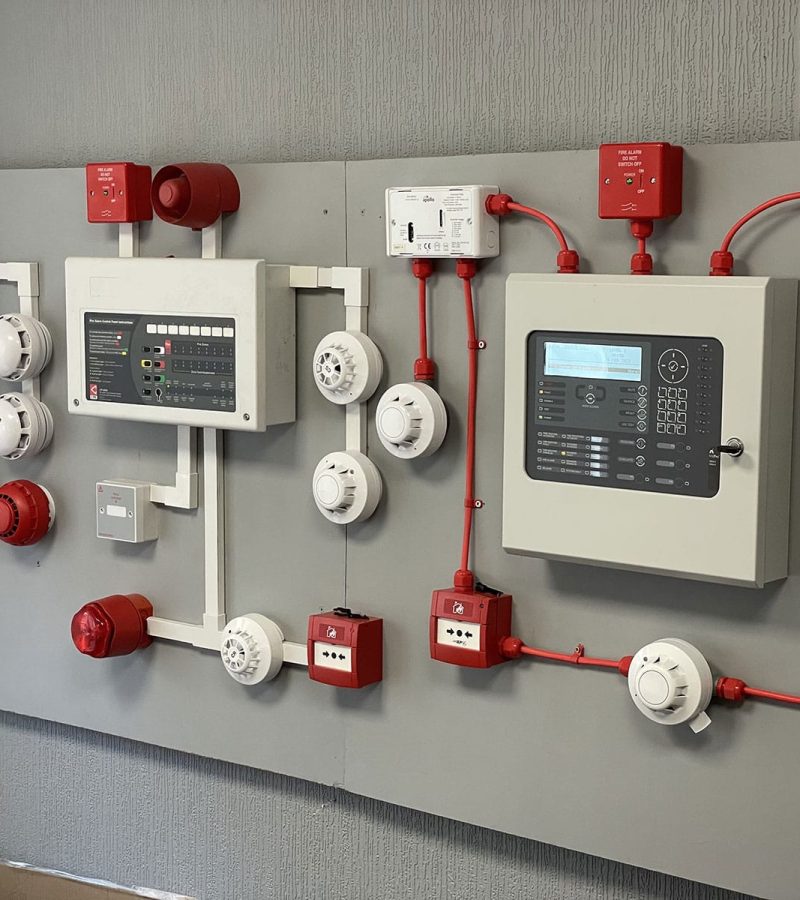
Detection is the first link in the chain. If a fire is not sensed early, nothing else matters. For commercial fire alarm systems, the Ontario Fire Code points to CAN/ULC-S536 for periodic inspection and testing, which is generally performed annually, while CAN/ULC-S537 covers the verification done when a system is first installed or significantly modified.
- Confirm the fire alarm control panel shows a normal, trouble-free status.
- Schedule annual fire alarm inspection and testing to CAN/ULC-S536, and keep the report on file.
- Verify any new or altered system to CAN/ULC-S537 before it is relied upon.
- For residential and small mixed-use buildings, confirm smoke alarms and CO alarms are present and working where required.
In Ontario homes, carbon monoxide alarms are required near sleeping areas where there are fuel-burning appliances or an attached garage. If your property includes residential units, fold this into your routine. Our guide on smoke and CO alarm installation covers correct placement and interconnection in detail, and our overview of fire alarm inspection and testing explains what a CAN/ULC-S536 visit involves.
Code note: Under the Ontario Fire Code, fire alarm systems generally require annual inspection and testing in accordance with CAN/ULC-S536, with results documented and retained on site for review.
Sprinkler and suppression checklist
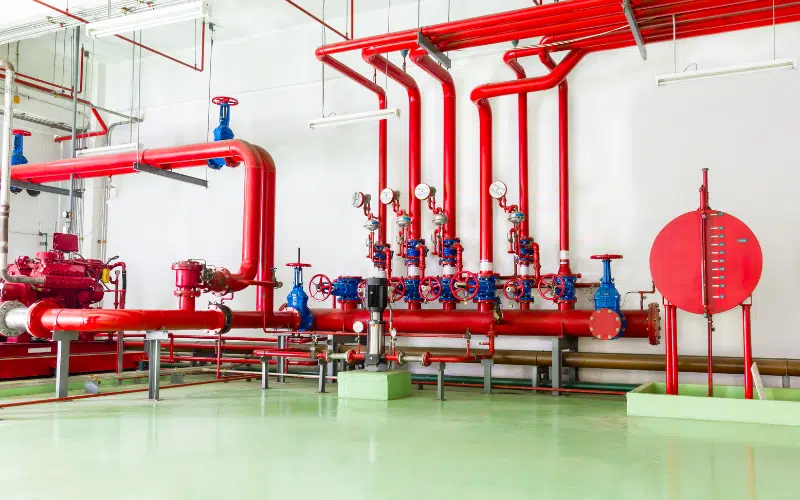
Water-based fire protection systems, including sprinklers and standpipes, are typically inspected, tested and maintained in line with NFPA 25. That standard sets different intervals for different tasks, from quick visual checks to longer-cycle flow and internal inspections. Suppression systems in commercial kitchens carry their own service requirements as well.
- Confirm control valves are open, accessible and supervised where required.
- Check gauges and the condition of visible sprinkler heads and piping.
- Keep at least 18 inches of clearance below sprinkler heads so spray patterns are not blocked by stored goods.
- Maintain kitchen suppression systems on their required service schedule.
- Retain NFPA 25 inspection and test records for the property.
If you are weighing a new install or an upgrade, our explainer on fire sprinkler installation in Toronto covers wet, dry and pre-action systems and where each fits.
Extinguishers and emergency lighting checklist
Portable extinguishers are governed by NFPA 10. The cycle generally includes a brief monthly visual check, a more thorough annual maintenance, an internal examination at roughly six years for many stored-pressure units, and hydrostatic testing at about twelve years. The right type and placement matter too, which our guide on fire extinguisher types explained walks through.
- Confirm extinguishers are mounted, visible, unobstructed and fully charged.
- Log the monthly quick-check and book annual maintenance with a qualified technician.
- Track six-year internal and twelve-year hydrostatic dates so nothing lapses.
Emergency lighting and exit signs need attention too. The Ontario Fire Code generally calls for a monthly function test of emergency lighting and a full-duration test annually to confirm batteries hold for the required period. Our guide on emergency and exit lighting in Toronto sets out the testing in plain terms.
Want a contractor to handle compliance?
Let Tovic Fire inspect, test and document every life-safety system on your Toronto or GTA property so your records are always inspection-ready.
Exits, signage and the fire safety plan
Hardware only protects people if they can get out. Inspectors in Vaughan, Markham and across Toronto routinely check that exits are usable and that the building has a current fire safety plan approved by the local fire department where required.
- Keep exit doors and routes clear, unlocked from the inside, and free of stored items.
- Confirm exit signs are illuminated and visible from the directions people will travel.
- Maintain an up-to-date fire safety plan that reflects current staff, layout and procedures.
- Train staff on their roles and keep a record of fire drills where they are required.
A fire safety plan in Ontario is more than a binder on a shelf. It names responsibilities, lists the systems in the building, and tells occupants what to do. Keeping it current is one of the easiest ways to demonstrate good-faith compliance.
Records, inspections and avoiding orders
| System | Requirement / standard | Typical frequency |
|---|---|---|
| Fire alarm system | Inspection & testing to CAN/ULC-S536; verification to CAN/ULC-S537 when new or modified | Annually (verification on install/alteration) |
| Sprinklers & standpipes | Inspection, testing & maintenance to NFPA 25 | Varies by task (weekly/monthly visual to annual and longer-cycle) |
| Portable extinguishers | Service to NFPA 10 | Monthly visual check; annual maintenance; ~6-year internal; ~12-year hydrostatic |
| Emergency lighting & exit signs | Function and full-duration battery testing per Ontario Fire Code | Monthly function test; annual full-duration test |
| Fire safety plan & records | Current plan plus inspection, test and maintenance records kept on site | Reviewed/updated as staff, layout or systems change |
Documentation is where many otherwise well-run buildings stumble. Systems can be in perfect order, but if the paperwork is missing, an inspector cannot confirm it. Keep inspection and test records on site and organised, ideally in one place that any manager can produce on request.
Bundling everything into a single annual visit makes this far simpler. Our overview of an annual fire inspection in Toronto shows how sprinkler, alarm, lighting and extinguisher checks can be reported together, and our breakdown of how often to inspect fire equipment lays out the full Ontario schedule. When records are complete and current, an inspection becomes a formality rather than a risk.
Tovic Fire is aligned with ULC, NFPA, CSA, TSSA and CFAA practice, performs City of Toronto permitted work, and provides 24/7 monitoring across the GTA. If you would rather not track every interval yourself, that is exactly what a contractor is for. Reach out through our contact page to get started.
Frequently asked questions
What is the Ontario Fire Code?
The Ontario Fire Code (O. Reg. 213/07) is a regulation made under the Fire Protection and Prevention Act. It sets the minimum requirements for fire safety in and around existing buildings, covering how fire protection systems are maintained, tested and kept in working order. It works alongside the Ontario Building Code, which governs new construction and major renovations.
Who is responsible for fire code compliance?
Under the Ontario Fire Code, the building owner generally carries the legal responsibility for fire safety, including maintaining systems and keeping records. Landlords, property managers and business operators often share day-to-day duties, but the owner cannot simply hand off accountability. A clear fire safety plan should set out who does what.
What records do I need to keep?
You generally need to keep records of inspections, tests and maintenance for your fire alarm, sprinkler, extinguisher and emergency lighting systems, along with your fire safety plan. These records typically must be available on site for review by a fire inspector. Retention periods vary, so it is wise to keep at least the most recent full cycle of documentation.
What happens during a fire inspection?
A fire inspector typically reviews your records, checks that life-safety systems are working, confirms exits and signage are clear, and looks at housekeeping and storage. If issues are found, you may receive an inspection order with a deadline to correct them. Staying inspection-ready year-round is the simplest way to avoid orders and follow-up visits.