Voice Evacuation (EVC) Systems in Toronto
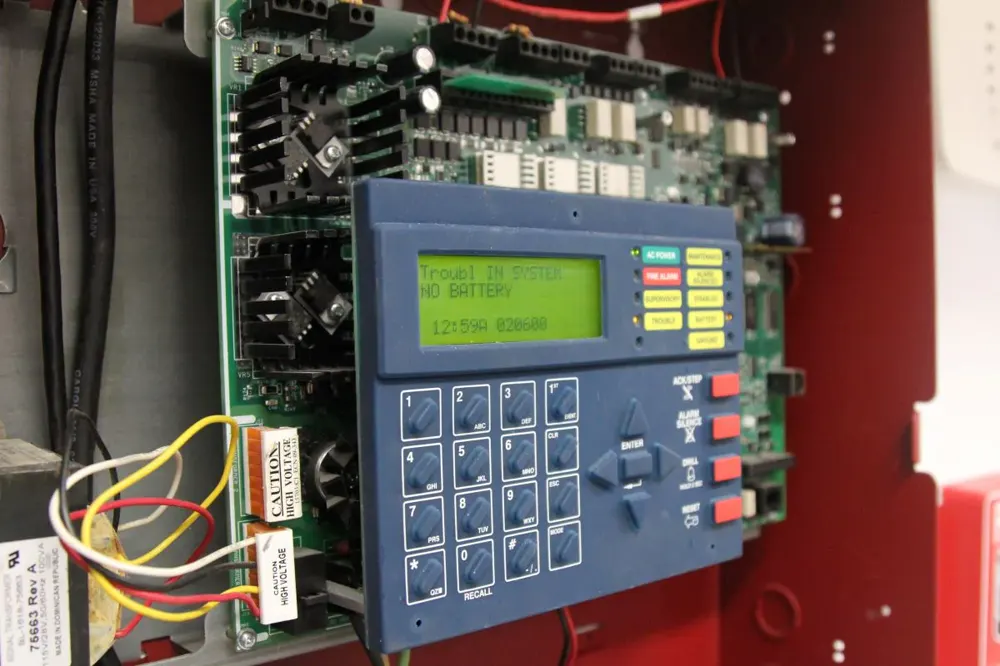
A voice evacuation system in Toronto replaces the plain fire bell with clear, intelligible spoken instructions and alert tones broadcast over speakers, usually paired with two-way firefighter telephones. Also called an emergency voice communication (EVC) system, it is designed for high-occupancy buildings across the GTA where occupants need to be told what to do, not just warned that something is wrong. Tovic Fire designs, installs, verifies and tests EVC systems to Ontario code.
Quick answer: A voice evacuation (EVC) system is a fire alarm feature that broadcasts clear voice messages and tones through speakers, and typically adds two-way firefighter phones so responders can communicate between floors. It is generally required in larger high-rise, assembly and institutional buildings under the Ontario Building Code. In Toronto and the GTA it is designed and installed to code, verified to CAN/ULC-S537, and tested annually to CAN/ULC-S536.
What is EVC or voice evacuation?
EVC stands for emergency voice communication. Instead of one uniform bell, the system uses distributed speakers to play a distinct alert signal and then a recorded or live voice message that tells occupants exactly what is happening and what to do. Because people react faster to instructions than to noise, voice systems reduce confusion and speed up an orderly evacuation.
Most EVC systems bundle three functions together:
- Voice broadcast over speakers, using alert and evacuation tones plus spoken messages.
- Firefighter telephones, a dedicated two-way circuit with jacks on each floor and in stairwells so responders can talk to the command panel.
- Zoned control from a central panel, so different areas can receive different messages at the same time.
When does the code require voice evacuation?
Voice evacuation is generally required in larger and higher-hazard buildings where a simple bell is not enough to manage occupants safely. Under the Ontario Building Code, an emergency voice communication system is typically called for in high-rise buildings, large assembly occupancies, care and institutional occupancies such as hospitals, and similar high-occupancy structures. The exact trigger depends on building height, use and occupant load.
Because requirements vary by building, the design must always be confirmed against the current code edition and the authority having jurisdiction. Our team handles City of Toronto permitted work and coordinates with reviewers on projects in Scarborough, North York, Etobicoke, Mississauga, Vaughan, Markham and Richmond Hill. If you are unsure whether your property needs EVC, an commercial fire inspection is the fastest way to find out.
How is EVC different from a bell system?
A conventional bell system does one thing: it makes the same loud sound everywhere, at once. That works for small buildings, but in a crowded tower it can cause hesitation, because occupants do not know if it is a drill, a false alarm or a real fire on their floor. A voice system removes that ambiguity by delivering clear guidance and, critically, by letting the fire department control messaging as the situation develops.
| Capability | Bell system | Voice evacuation (EVC) |
|---|---|---|
| Occupant notification | Single bell tone | Alert tone plus spoken instructions |
| Zoned messaging | No, all zones the same | Yes, per floor or area |
| Firefighter phones | Usually none | Two-way circuit to command panel |
| Typical buildings | Smaller, low-rise | High-rise, assembly, institutional |
| Governing test standard | CAN/ULC-S536 | CAN/ULC-S536 (plus S537 at install) |
Both are part of the building fire alarm system, so both fall under the same annual testing standard. The difference is scope: an EVC install has more to verify, from speaker intelligibility to phone circuits. If you want the fundamentals of the underlying panel first, our guide to fire alarm system installation is a good companion read.
What are zoned messaging and firefighter phones?
Zoned messaging means the command panel can address parts of the building independently. During an incident the fire department can, for example, tell the fire floor and the floor above to evacuate while asking other floors to stand by, reducing stairwell congestion in a tall building. Pre-recorded messages cover the common scenarios, and a microphone at the panel allows live announcements.
Firefighter telephones are a separate hardwired circuit that responders plug handsets into on each floor and in stairwells. This gives clear, reliable communication that does not depend on cellular coverage inside a concrete tower. Together with reliable 24/7 fire alarm monitoring, these features are what make an EVC system genuinely useful during a real emergency, not just compliant on paper.
Need EVC design or testing?
Our technical team can scope a new voice evacuation system or verify and test an existing one, all to Ontario code.
How is EVC installed and tested annually?
Installation starts with a design that maps speaker coverage, zoning and firefighter phone locations to your floor plans, then routes it through permitting. Once installed, a new or modified voice system must be verified under CAN/ULC-S537 before it is placed in service. Verification proves every device works as designed, that audibility and intelligibility targets are met, and that the system performs correctly on backup power.
After it goes live, EVC is inspected and tested every year under CAN/ULC-S536, the same standard that governs the rest of your fire alarm system. Annual testing confirms:
- Speaker audibility and voice intelligibility across all areas.
- Correct zoned message routing from the command panel.
- Amplifier output and battery backup capacity.
- Firefighter phone circuit operation between the panel and every jack.
Booking EVC testing alongside your other systems keeps everything on one schedule. Many Toronto property managers combine it with annual fire alarm inspection and testing and their broader annual fire inspection so the whole building is documented in one visit.
Booking EVC work in Toronto and the GTA
Whether you are planning a new tower, retrofitting an older building, or keeping an existing system compliant, Tovic Fire handles EVC design, installation, CAN/ULC-S537 verification and annual CAN/ULC-S536 testing across Toronto and the GTA. We align our work to ULC, NFPA, CSA and TSSA requirements and coordinate City of Toronto permits where needed. For condo boards and property managers, see our overview of fire protection for Toronto condos, or reach out to request a site assessment and we will scope the right system for your building.
Frequently asked questions
What is an EVC system?
EVC stands for emergency voice communication. It is a fire alarm feature that broadcasts clear voice messages and alert or evacuation tones through speakers, and usually includes two-way firefighter telephone circuits so responders can talk between floors. It replaces or supplements a simple bell so occupants get instruction, not just noise.
Which buildings need voice evacuation?
Voice evacuation is generally required in larger, higher-hazard and high-occupancy buildings, such as high-rise residential and office towers, hospitals, large assembly occupancies and similar buildings, where the Ontario Building Code calls for an emergency voice communication system. Your design should always be confirmed against the current code and the authority having jurisdiction for your specific building.
How is a voice evacuation system tested?
EVC forms part of the fire alarm system, so it is inspected and tested annually under CAN/ULC-S536, with new or modified systems verified under CAN/ULC-S537. Testing confirms speaker audibility and intelligibility, correct zoned messaging, amplifier and battery backup performance, and that firefighter phone circuits work between the panel and remote jacks.
Can you upgrade a bell system to EVC?
Often yes. Many bell-based fire alarm panels can be upgraded or replaced with a voice-capable system, adding amplifiers, speakers and firefighter phones. The scope depends on your building, existing wiring and current code, and the new or modified system must be verified under CAN/ULC-S537 before it goes into service.