Fire Pump Inspection & Testing in Toronto
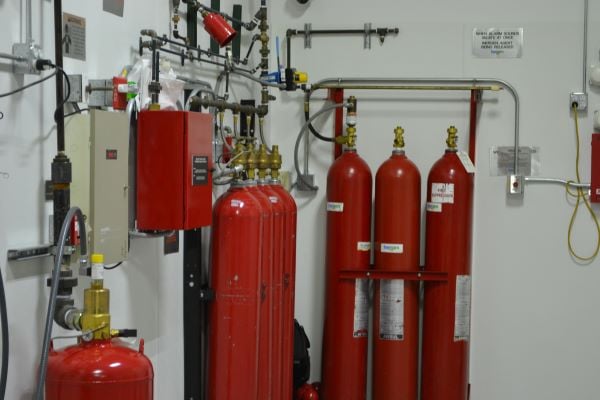
Fire pump testing in Toronto keeps the one component that pressurizes your sprinklers and standpipes ready to perform when a fire starts. Under NFPA 25, your fire pump needs routine no-flow (churn) tests plus a full annual flow test, and Tovic Fire performs both for commercial and residential buildings across Toronto and the GTA. Skip the schedule and you risk a pump that will not start, or one that cannot deliver the pressure your life-safety systems were designed around.
Quick answer: A fire pump should be inspected and tested on the NFPA 25 schedule: a weekly no-flow (churn) test for most diesel pumps and a monthly one for many electric pumps, plus a full annual flow test at churn, 100 percent, and 150 percent of rated capacity. The annual test confirms the pump still meets its certified performance curve. In Toronto and the GTA, Tovic Fire runs these tests, records the results, and flags any deficiencies for repair.
What does a fire pump do?
A fire pump boosts water pressure and flow so your fire sprinkler and standpipe systems can deliver enough water to control a fire on the top floor or the far corner of a building. When the municipal supply alone cannot meet the hydraulic demand, the fire pump makes up the difference automatically the moment pressure drops.
Most installations pair the main pump with a smaller jockey pump, which maintains normal system pressure and prevents the large pump from starting for every minor fluctuation. The main fire pump only starts when demand is real, such as when a sprinkler head opens or a standpipe valve is used. Because the pump is central to your sprinkler system inspection and testing program, its reliability underpins your whole water-based fire protection strategy.
Why does fire pump testing matter?
A fire pump can sit idle for months, so testing is the only way to know it will start and perform on demand. Bearings seize, batteries die, controllers fault, and valves get left closed. A short churn test each week catches those problems while they are cheap to fix, and the annual flow test proves the pump still meets the performance it was designed and certified to deliver.
Testing is also a compliance requirement. Water-based fire protection systems are inspected and tested under NFPA 25, and the broader duty to maintain your systems falls under the Ontario Fire Code (O. Reg. 213/07) within the Fire Protection and Prevention Act. Documented test records are what a fire inspector, your insurer, and your building fire safety plan all expect to see.
The fire pump test schedule (weekly, monthly, annual)
NFPA 25 sets out inspection and testing intervals for water-based systems, and the fire pump has one of the most demanding schedules. The table below summarizes the typical routine. Your specific building, pump type, and local requirements confirm the exact frequency.
| Task | Typical interval | What it confirms |
|---|---|---|
| Visual inspection of pump room and gauges | Weekly | Valves open, no leaks, suction pressure normal |
| No-flow (churn) test, diesel pump | Weekly | Pump starts, builds pressure, runs without overheating |
| No-flow (churn) test, electric pump | Monthly (generally) | Pump starts and runs on demand |
| Full annual flow test | Annually | Performance at churn, 100% and 150% of rated capacity |
| Battery and controller checks (diesel) | Weekly / monthly | Reliable starting under power loss |
Weekly churn tests are usually run by trained on-site staff, while the annual flow test is performed by a qualified fire protection contractor with the right test equipment. Tovic Fire can handle the annual test and coach your team on the weekly routine.
The annual fire pump flow test
The annual flow test is the most thorough check the pump receives. The pump is run at three points: no-flow (churn), 100 percent of rated capacity, and 150 percent of rated capacity. At each point the technician records suction pressure, discharge pressure, flow, and pump speed, then plots the results against the manufacturer's certified curve.
Water is discharged through a test header, a flow meter, or hydrants, and a healthy pump should still deliver close to its original curve, generally within acceptable tolerances. A pump that falls short may have a worn impeller, a partly closed valve, a suction supply problem, or a driver issue. Any deficiency found during the test is documented so it can be scheduled for repair and maintenance before it becomes an emergency.
Diesel vs electric fire pumps
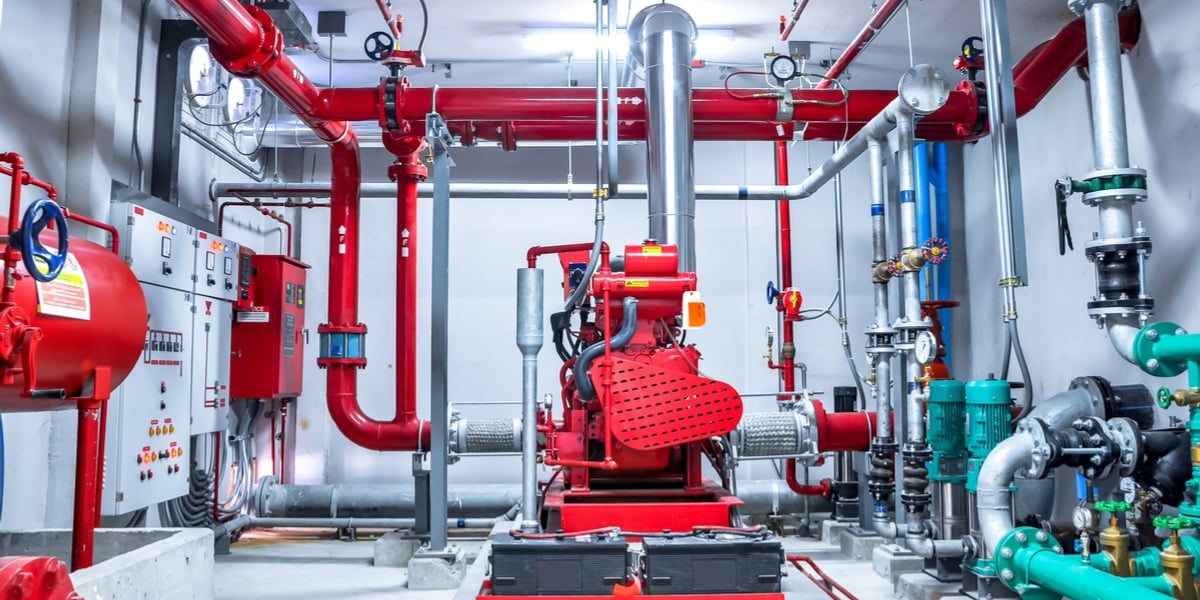
Fire pumps are driven either by an electric motor or a diesel engine, and the choice affects the testing routine. Electric pumps are simpler to maintain and are common where reliable power and, where required, a backup power source are available. Diesel pumps are chosen when a building cannot guarantee power during a fire, and they carry extra checks for fuel, batteries, cooling, and exhaust.
- Electric pumps: generally a monthly no-flow test, with attention to the controller, motor, and power supply.
- Diesel pumps: a weekly no-flow test, plus regular battery, fuel level, coolant, and engine checks because the engine must start every time.
- Both types: the same annual flow test against the certified performance curve.
Whichever driver your building uses, the pump works alongside your standpipe and hose systems and sprinkler network, so all three should be inspected as one coordinated program.
Fire pump test coming due?
Book a qualified technician to run your annual flow test and document the results before your inspection deadline.
Booking fire pump testing in Toronto
Tovic Fire performs fire pump inspection and testing for condos, warehouses, and commercial buildings across Toronto, Scarborough, North York, Etobicoke, Mississauga, Vaughan, Markham, and Richmond Hill. We align our work to NFPA 25 and the Ontario Fire Code, carry out City of Toronto permitted work where required, and provide clear records you can hand to an inspector or insurer.
Fire pump testing pairs naturally with your other scheduled work. Many building owners combine it with an annual fire inspection so sprinklers, standpipes, alarms, and the pump are all checked in one visit. If you are not sure what your building requires, our team can review your systems and put together the right schedule. Start by requesting a site assessment or browse our full fire protection services.
Frequently asked questions
How often is a fire pump tested?
Under NFPA 25, a no-flow (churn) test is run weekly for most diesel pumps and monthly for many electric pumps, and a full annual flow test is performed once a year. Your fire safety plan and local requirements confirm the exact frequency for your building.
What is an annual fire pump flow test?
An annual flow test runs the fire pump at no-flow (churn), 100 percent of rated capacity, and 150 percent of rated capacity while recording pressure and flow. The results are plotted against the manufacturer's certified curve to confirm the pump still delivers the water your sprinkler and standpipe systems need.
What is a churn test?
A churn or no-flow test starts the fire pump and runs it briefly with the discharge closed to confirm it starts on demand, builds pressure, and runs without overheating or unusual noise. It is the routine weekly or monthly check that catches problems before an emergency.
Do I need a fire pump?
A fire pump is required when the municipal water supply cannot deliver enough pressure or flow to your sprinkler and standpipe systems, which is common in tall buildings, large warehouses, and sites far from strong water mains across the GTA. A hydraulic design review determines whether your building needs one.