Emergency Lighting Installation in Toronto
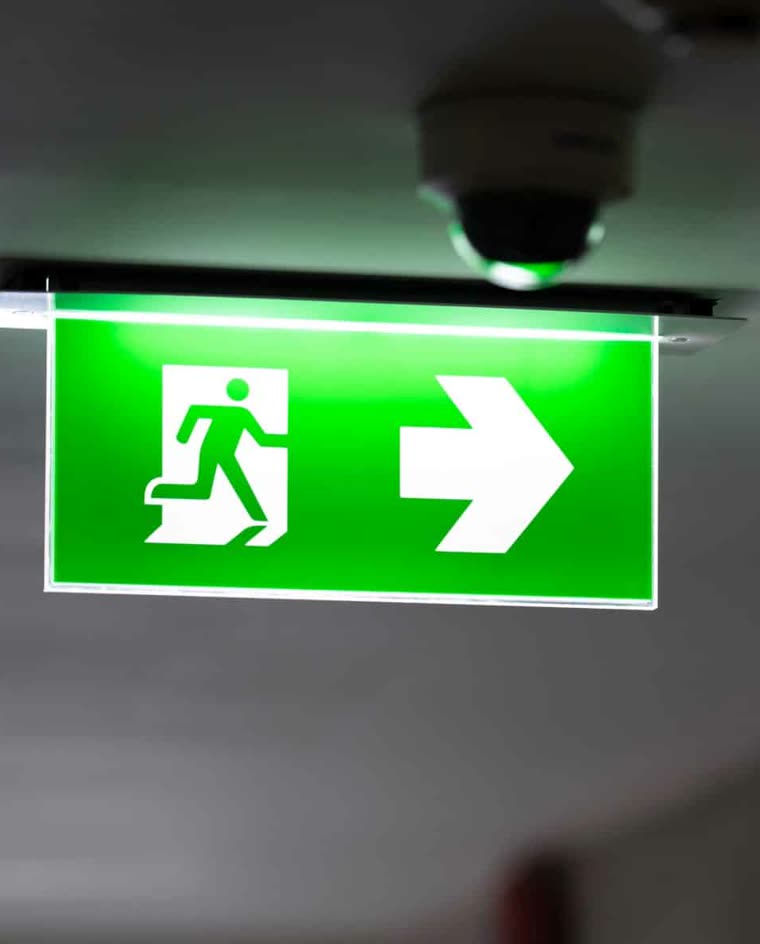
Emergency lighting installation in Toronto keeps people moving safely toward the exits when the power goes out. Tovic Fire designs and installs battery-backup units, central inverters, and illuminated exit signs to the Ontario Building Code for offices, retail, condos, and industrial buildings across Toronto and the GTA. This guide explains what is required, where it goes, and how the system is tested once it is in.
Quick answer: Emergency lighting installation means placing battery-backup light heads, or a central inverter, plus illuminated exit signs along exit routes, corridors, stairwells, and exit doors so they light automatically when normal power fails. In Ontario the layout and duration follow the Ontario Building Code, and units must stay lit for a minimum period, often at least 30 minutes. A qualified installer sizes the system, wires it to the correct circuits, and function-tests every unit before handover.
What emergency lighting is required?
Emergency lighting is the standby lighting that switches on automatically the instant normal power is lost, giving occupants enough light to find and follow the way out. A compliant emergency light install usually combines three elements: battery-backed light heads that flood corridors and stairs, illuminated or externally lit exit signs that mark the doors, and a battery or inverter source that carries the load for the required time.
- Battery backup lighting heads mounted to cover exit routes and open floor areas.
- Exit sign installation over doors and at changes of direction on the path out.
- A standby power source, either self-contained batteries or a central inverter, sized to the required duration.
Get the fixtures and duration right at install and the annual sign-off becomes routine. If you also handle other life-safety systems, our annual fire inspection in one report can bundle lighting with your alarm and extinguisher checks.
Where the OBC requires it
Under the Ontario Building Code, emergency lighting is generally required along the routes people use to leave the building. The exact placement depends on your occupancy and layout, but the common locations are consistent, and OBC lighting rules focus on keeping the whole path of travel illuminated.
- Exit corridors, stairwells, and ramps.
- Principal routes serving open office and retail floor areas.
- Exit doors and the areas immediately outside them.
- Electrical rooms, mechanical rooms, and similar service spaces.
Illuminated exit signs pair with these lights to mark each door and turn. For a deeper look at sign placement and testing intervals, see our guides on exit sign requirements and testing and emergency and exit lighting in Toronto.
| Item | Typical requirement | Who confirms it |
|---|---|---|
| Exit route coverage | Continuous illumination of corridors, stairs, and exit doors | Designer / installer at layout |
| Minimum duration | Often at least 30 minutes; up to 2 hours for high buildings and some uses | Ontario Building Code |
| Exit signs | Over exit doors and at changes of direction | Installer at commissioning |
| Monthly test | Function test that units transfer to battery and light | Building owner / service provider |
| Annual test | Full-duration test, e.g. 30 minutes, with a written record | Service provider |
Battery units vs central inverter
There are two common ways to power emergency lighting, and the right one depends on building size, budget, and how you prefer to maintain it. Self-contained battery units keep a small battery inside each fixture, so the system is simple to install and expand. A central inverter feeds many standard fixtures from one battery bank or is paired with a standby generator.
- Self-contained battery units: lower up-front cost, easy to add in tenant fit-outs, but more individual batteries to test and replace over time.
- Central inverter or generator-backed: centralized maintenance, cleaner ceilings, and longer duration, better suited to larger buildings, condos, and high buildings.
Many buildings in Scarborough, North York, and Etobicoke run a mix. We recommend the approach after walking the site, and lay it out alongside your other fire protection services so nothing is missed.
LED upgrades
If your building still runs older incandescent emergency heads, an LED upgrade is usually worth doing at install or replacement time. LED emergency fixtures draw far less current, which means smaller batteries can hold the required duration, and lamps last much longer between service visits. The lower heat output also eases wear on the fixture, and the brighter, more even output helps the light reach the levels the code expects along the exit path.
For a building manager in Mississauga, Vaughan, or Markham weighing a retrofit, LED heads and modern exit signs also reduce nuisance failures during the annual full-duration test. Pairing a lighting upgrade with a broader fire code retrofit for older buildings keeps disruption to one visit.
Need emergency lighting installed?
Book a site assessment and we will size, place, and install your emergency lighting to the Ontario Building Code.
Install plus the testing that follows
A proper installation does not end when the fixtures are mounted. We wire units to the correct unswitched circuits, confirm the batteries or inverter carry the required duration, and function-test every head and exit sign at commissioning. City of Toronto permitted work is handled where the scope calls for it.
After handover, emergency lighting needs ongoing care to stay compliant. The generally expected routine is a monthly function test that units transfer to battery and light, plus an annual full-duration test, for example 30 minutes, with a written record kept on site. We can take on that recurring schedule so it never lapses, and fold it into your Ontario Fire Code compliance checklist and overall inspection calendar.
Booking installation
Getting compliant is straightforward. Tell us the building type and size, and we will assess the layout, quote the fixtures and power source, and schedule the install around your operations. Tovic Fire serves Toronto and the GTA, aligns to ULC, NFPA, and CSA standards, and provides 24/7 monitoring for the wider life-safety systems we install.
Ready to move? Request a site assessment or call 647-377-3517 and we will get your emergency lighting sorted.
Frequently asked questions
Where is emergency lighting required?
Under the Ontario Building Code, emergency lighting is generally required along exit routes, in corridors, stairwells, principal routes serving open floor areas, exit doors, and areas such as electrical and mechanical rooms. Illuminated exit signs mark the doors and changes of direction along the path to the outside.
How long must it stay lit?
Emergency lighting must provide illumination for a minimum duration on battery or standby power when normal power fails. Many occupancies require at least 30 minutes, while high buildings and certain uses require up to two hours. We size the batteries or inverter to the duration your occupancy and the Ontario Building Code require.
Battery units or central inverter?
Self-contained battery units are cost-effective and simple for smaller buildings and tenant spaces. A central inverter or generator-backed system suits larger buildings where centralized maintenance, longer duration, and fewer scattered batteries are preferred. We recommend the right approach after a site assessment.
Do you test after installing?
Yes. After installation we function-test every unit and set you up for the ongoing schedule the code expects, generally a monthly function test and an annual full-duration test, such as 30 minutes, with a written record. We can carry out that recurring testing for you across Toronto and the GTA.