Carbon Monoxide Detector Requirements in Ontario

The carbon monoxide detector requirements in Ontario are simpler than most Toronto and GTA homeowners expect: if your home has a fuel-burning appliance, a fireplace, or an attached garage, the Ontario Fire Code requires a working CO alarm near the sleeping areas. Get the source and placement right and you are compliant. This guide covers exactly where CO alarms are required, where to put a CO alarm, and who must comply.
Quick answer: Under Ontario's Fire Code, carbon monoxide alarms are required in most residential buildings that contain a fuel-burning appliance (gas, oil, propane or wood), a fireplace, or an attached garage or storage. The alarm must be installed adjacent to each sleeping area so it can wake occupants. Homes with none of these CO sources are generally exempt, but many owners install one anyway.
The short answer: when are CO alarms required?
Ontario's CO alarm law was made province-wide under the Ontario Fire Code (O. Reg. 213/07), which falls under the Fire Protection and Prevention Act. The trigger is not the type of building so much as whether a carbon monoxide source is present. A CO alarm is required when a home or residential suite contains, or is served by, any of the following:
- A fuel-burning appliance such as a gas furnace, gas or propane water heater, gas stove, gas dryer, oil furnace, or a wood or pellet stove.
- A fireplace, whether wood-burning or gas.
- An attached garage or an attached storage area that could allow exhaust to enter living space.
If your home genuinely has none of these, the Code does not mandate a CO alarm. In practice, most GTA houses, condos and rental units qualify because of a gas furnace, gas range or an attached garage. This requirement sits alongside your smoke alarm duties, which you can review in our guide to smoke and carbon monoxide alarm installation.
Homes with fuel-burning appliances or attached garages
Carbon monoxide is colourless, odourless and produced any time a carbon-based fuel burns incompletely. That means the same equipment that heats a Scarborough bungalow or a North York townhouse in winter is the exact reason the law wants an alarm on watch. An attached garage matters too, because a vehicle idling even briefly can push CO into the house through shared walls and doors.
For most Toronto and GTA households, the practical takeaway is straightforward: assume you need a CO alarm unless every heat and appliance source in your home is electric and there is no attached garage. If you are unsure whether a particular appliance counts, our team can confirm during a site visit and pair it with your broader Ontario Fire Code compliance checklist.
Where CO alarms must be located
Placement is where compliance is most often missed. The Ontario Fire Code requires a carbon monoxide alarm to be installed adjacent to each sleeping area. In plain terms, that means in the hallway or immediately outside the bedrooms, close enough that the alarm will wake a sleeping person. Where bedrooms are spread across levels or far apart, more than one alarm is typically needed.
A few practical placement rules for figuring out where to put a CO alarm:
- Install adjacent to each sleeping area, on every storey that has bedrooms.
- Follow the manufacturer's mounting height instructions. CO mixes fairly evenly with air, so most units can be placed on a wall or ceiling per their listing.
- Keep alarms away from dead-air corners, direct drafts from vents, and the immediate area right next to a fuel-burning appliance where nuisance alarms are more likely.
- Never paint over an alarm or block its vents.
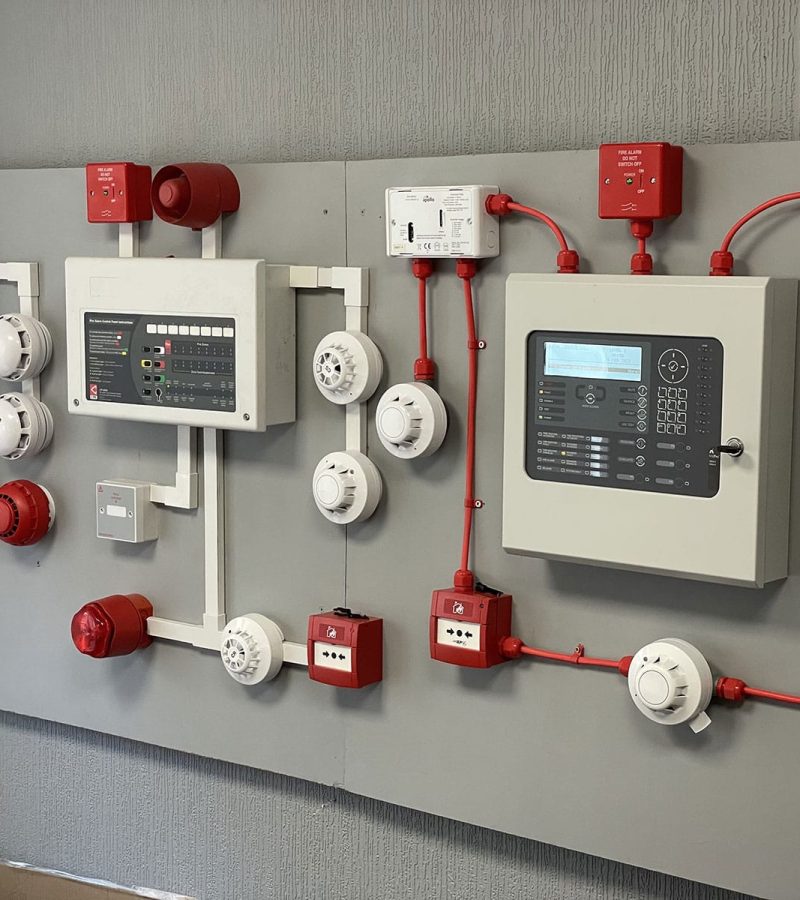
Combined smoke and CO alarms
Many buildings use combination smoke and CO alarms, which satisfy both requirements from a single device when installed correctly. These are convenient near bedrooms, where both a smoke alarm and a CO alarm are commonly required. Just remember that a combined unit still has to meet the placement rules for each function, and combination units also have a sensor end-of-life date. When one part of a combo unit expires, the whole device is replaced. If you are also sorting out smoke coverage, see our note on when to replace alarms and who can service them.
| Situation | CO alarm required? | Typical placement |
|---|---|---|
| Home with gas furnace or gas water heater | Yes | Adjacent to each sleeping area |
| Home with a wood or gas fireplace | Yes | Adjacent to each sleeping area |
| House or condo with an attached garage | Yes | Adjacent to each sleeping area |
| All-electric home, no attached garage | Generally no | Optional, near bedrooms |
| Multi-storey home with bedrooms on two levels | Yes | On each storey with bedrooms |
Unsure if you are CO-compliant?
Our technicians confirm your sources, place alarms correctly and document it, so a booked site assessment removes the guesswork.
Businesses and multi-residential buildings
The same principle extends beyond single-family homes. In apartment buildings, condos, and mixed-use properties across Toronto, Mississauga, Vaughan, Markham, Etobicoke and Richmond Hill, CO alarms are required in suites and service rooms wherever fuel-burning equipment or an adjacent garage creates a risk. Common carbon monoxide sources in these buildings include boiler and mechanical rooms, garages, and suites with gas ranges.
Owners and landlords carry the duty to install and maintain these alarms, and tenants must not disable them. For rental-specific obligations, see our guide to smoke and CO rules for Ontario landlords. Larger buildings often integrate CO detection with the fire alarm and monitoring system, which we cover alongside annual fire alarm inspection and testing. Getting the interaction between devices right is part of a well-run annual fire inspection.
Get CO alarms installed
Compliant CO protection comes down to three things: identify every source, place alarms adjacent to sleeping areas, and replace units before their sensors expire, generally every 7 to 10 years. Tovic Fire serves Toronto and the GTA and can supply, place and install alarms as permitted work in the City of Toronto, aligned to ULC, NFPA and CSA practice. To book, request a site assessment or explore our full range of detection and life-safety services.
Frequently asked questions
Are CO alarms required by law in Ontario?
Yes. Under the Ontario Fire Code, working carbon monoxide alarms are required in most homes and residential buildings that have a fuel-burning appliance, a fireplace, or an attached garage or storage. If your home has none of those sources, a CO alarm is not mandated, though many owners still install one for added protection.
Where do CO alarms go?
A CO alarm must be located adjacent to each sleeping area, meaning near or in the hallway outside bedrooms so a sleeping person can hear it. In larger homes and multi-storey layouts, additional alarms may be needed. Always follow the manufacturer's placement instructions and your local requirements.
Do I need one if I have electric heat?
If your home has no fuel-burning appliance, no fireplace, and no attached garage or storage, the Ontario Fire Code generally does not require a CO alarm. However, if you have a gas stove, gas water heater, gas dryer, wood stove, or an attached garage, a CO alarm is required even when your primary heat is electric.
How often are CO alarms replaced?
CO alarm sensors wear out, so units typically need replacement every 7 to 10 years depending on the model. Check the manufacturer's stated end-of-life date printed on the alarm, and replace the unit rather than only the battery when it reaches that date.